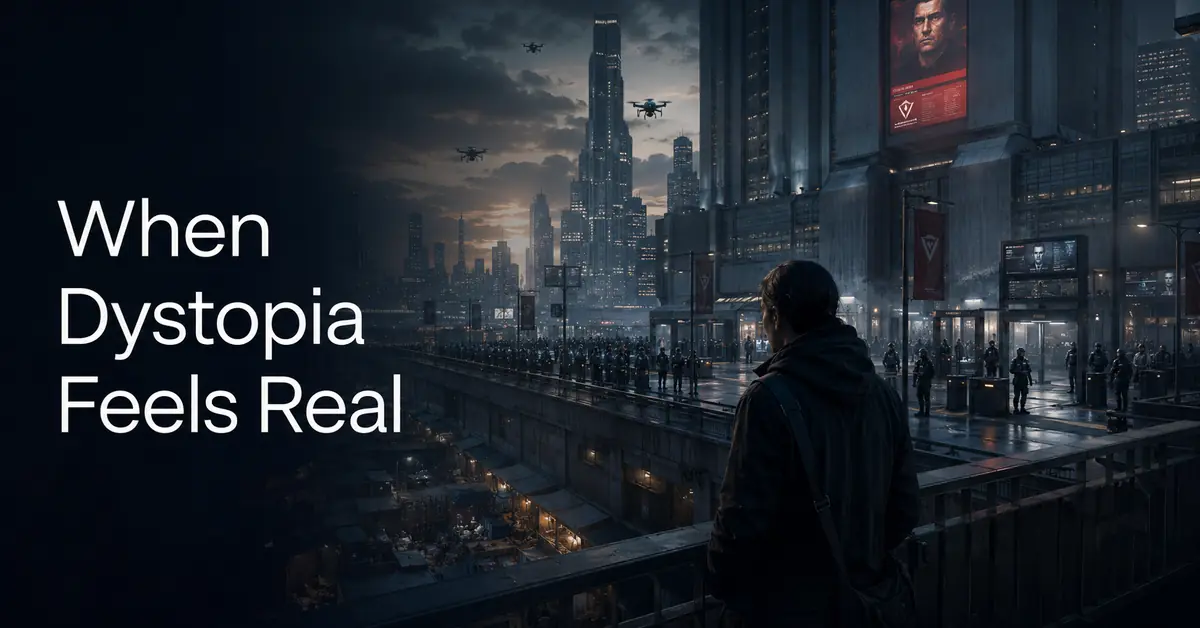
Readers don’t expect dystopian fiction to predict the future.
At least, not in a literal sense.
What they do expect is a world that feels possible.
The story might take place many years in the future. The technology could be things we haven’t seen yet. The society might have rules that feel odd at first. Still, the best dystopian sci-fi books make readers think, “I can see how people ended up living like this.”
That sense of realism is what makes a dystopian novel memorable. The details might be made up, but the emotions, conflicts, and choices feel familiar.
The World Has to Make Sense
A believable dystopian world doesn’t appear out of nowhere. Readers want to understand how society reached its current state.
What happened before everything changed? What problems was society trying to solve? Why did people accept the system they now live under?
Writers don’t have to explain everything in detail, but there should be enough hints for readers to see how the world changed. When a dystopian setting feels like it came from years of choices, compromises, and mistakes, it’s easier to believe.
Many of the best dystopian stories work because they build on real worries. They take current fears, trends, or social issues and imagine what could happen if those things went further.
People Matter More Than the System
Writers often spend a lot of time creating governments, social systems, and new technologies. These things matter, but they usually aren’t what readers remember most.
Readers remember people.
A controlled society gets interesting when it affects someone’s family. A hidden secret matters when it changes a friendship. A strict rule means more when a character has to choose whether to follow it or break it.
That’s why the best dystopian novels focus on personal stories as much as the bigger world. The setting creates the conflict, but the characters make readers care.
Without that human connection, even the most creative worlds can feel distant.
Hidden Truths Make Dystopian Stories Compelling
Many dystopian stories are built around a discovery.
At first, the main character accepts the world as it is. The rules seem normal because they don’t know anything else. Then something changes. A piece of information doesn’t fit. A question goes unanswered. A secret starts to come out.
That moment changes everything.
As the character looks for answers, readers search with them. Each discovery shows another part of the world and often reveals truths that have been hidden for years.
This is one reason why dystopian fiction keeps attracting readers. People like mysteries, especially when they connect to bigger truths about society, history, or human nature.
Uncertainty Creates Real Stakes
Uncertainty is what makes many dystopian sci-fi stories feel real.
Characters don’t know everything. They make choices without all the facts, trust the wrong people, and sometimes believe things that aren’t true.
That feels familiar because it’s like real life. We all make decisions without knowing everything, learn as we go, and sometimes make mistakes.
The best dystopian stories use this uncertainty. Instead of giving clear answers, they put characters in situations where the truth is hard to find.
That struggle makes the story feel more personal and believable because readers can relate to it.
How Preexistence Uses These Elements
One of the most interesting aspects of Preexistence is the role uncertainty plays throughout the story.
The characters face strange dreams, visions, and discoveries that don’t always make sense. As they look for answers, they find information that challenges what they thought they knew about their world.
The mystery isn’t just about the larger society. It affects friendships, relationships, trust, and personal identity. The more they learn, the harder it is to tell fact from assumption.
This mix of personal conflict and bigger mystery helps the story feel real, even with its futuristic setting. Readers aren’t just following a search for answers. They’re watching characters try to understand themselves as the truth unfolds.
Why Readers Keep Returning to Dystopian Fiction
Every generation seems to discover its own dystopian stories.
The settings change. The technology changes. The dangers look different in each book.
What stays the same is the set of questions these stories explore.
But the questions these stories explore stay the same. How do individuals respond when the truth becomes difficult to find? What happens when a person discovers that the world they trusted isn’t exactly what it seems?
These questions stay relevant because they aren’t just found in fiction. They reflect challenges people face in many parts of life.
So, that is the reason why the best dystopian stories are remembered for more than just their futuristic worlds. They stay with readers because they explore real human experiences, even in imagined futures.